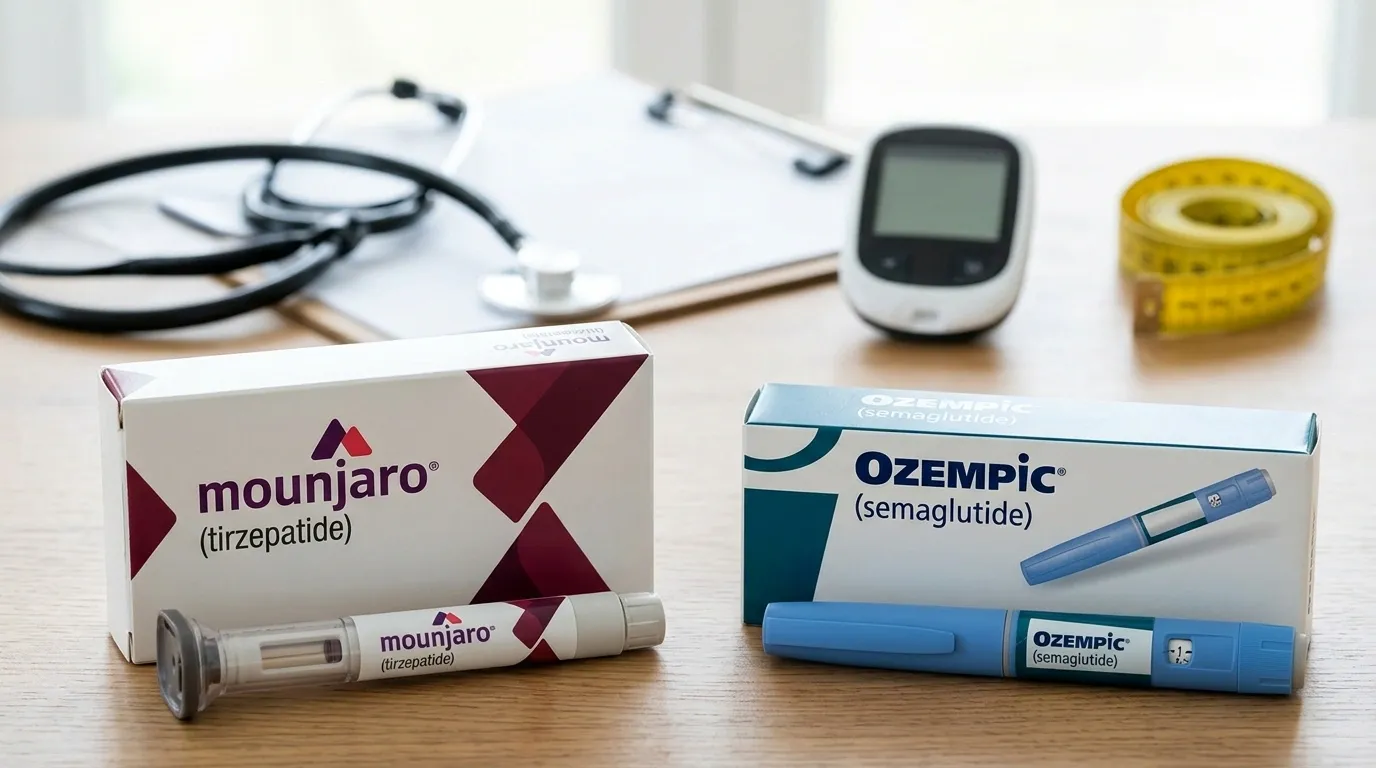
Mounjaro vs Ozempic for Weight Loss and Diabetes Treatment
Mounjaro and Ozempic are injectable medications used to improve blood sugar control in adults with type 2 diabetes. Both are administered once a week and affect hormones involved in blood glucose regulation and appetite, but they are not the same medication. They contain different active ingredients, work through different hormonal pathways, and have distinct approved uses and dosage schedules. Their effects on body weight have also been examined in clinical studies.
Understanding Mounjaro vs Ozempic can help you learn more about these treatment options and the differences between them. However, choosing one medication should not depend only on how much weight you hope to lose. Your medical history, current weight, other health conditions, treatment goals, and existing medications all need to be considered.
At Gardenia Medical Centre, patients can discuss their weight management goals with the medical team and review the health factors that may influence their treatment options. A medical assessment can help determine which approaches may be appropriate for an individual's needs rather than relying on other people's experiences or using prescription medication without professional guidance.
What Are Mounjaro and Ozempic?
Mounjaro and Ozempic are prescription medications administered as injections under the skin once a week. Both influence hormonal pathways involved in blood sugar regulation and appetite, but each has a different active ingredient and specific approved uses.
Mounjaro contains tirzepatide. In the United States, it is approved to improve blood sugar control in adults with type 2 diabetes, alongside diet and physical activity. Tirzepatide works on two hormone receptors involved in glucose regulation and appetite.
Ozempic contains semaglutide. It is also approved in the United States to improve blood sugar control in adults with type 2 diabetes, in addition to diet and exercise. Its prescribing information also includes certain additional uses for eligible patients, depending on their health status and cardiovascular or kidney risks.
It is important to distinguish Ozempic from Wegovy. Both contain semaglutide, but they are separate products with different approved indications and dosage schedules. Wegovy is specifically approved in certain markets for chronic weight management, while Ozempic has its own dosing and indications. Therefore, results from every clinical study involving semaglutide should not automatically be described as results from Ozempic.
Approval status and prescribing guidance can vary between countries. Patients in Qatar should discuss the locally approved indications and available formulations with a qualified healthcare professional before starting treatment.
What Are the Active Ingredients in Each Medication?
The difference between the two medications begins with their active ingredients. This distinction is important because each ingredient acts on specific hormone receptors and may produce different treatment responses:
- Tirzepatide: The active ingredient in Mounjaro. It acts on receptors for two naturally occurring hormones: glucose-dependent insulinotropic polypeptide (GIP) and glucagon-like peptide-1 (GLP-1). These hormones are involved in the body's response to food, including insulin release and appetite regulation.
- Semaglutide: The active ingredient in Ozempic. It belongs to a group of medications called GLP-1 receptor agonists. It activates GLP-1 receptors, helping the body release insulin in response to elevated blood glucose. It also affects glucagon secretion, appetite, and the rate at which food leaves the stomach.
The distinction between Tirzepatide and Semaglutide is not simply a difference in brand names. The ingredients target different hormonal pathways, which helps explain why their clinical effects and study results are not identical. Neither medication should be treated as a direct substitute for the other without medical advice.
How Do Mounjaro and Ozempic Work in the Body?
Both medications influence hormones that help regulate blood glucose after eating. However, their mechanisms are not identical. Tirzepatide activates both GIP and GLP-1 receptors, whereas semaglutide acts on GLP-1 receptors.
This is the main distinction behind how Mounjaro and Ozempic work:
- Mounjaro (Dual Agonist): Tirzepatide helps increase insulin release when blood glucose levels are elevated and reduces glucagon secretion, a hormone that can raise blood sugar. It also affects appetite and may slow stomach emptying, which can contribute to feeling full and eating less.
- Ozempic (Single GLP-1 Agonist): Semaglutide activates GLP-1 receptors, helping the body release insulin in response to higher blood glucose and reducing glucagon secretion. It may also slow stomach emptying and influence hunger and fullness signals.
These effects can support blood sugar management and may contribute to weight reduction in some patients. However, neither medication directly burns or melts body fat. Weight changes are generally linked to effects on appetite, food intake, and other metabolic processes.
Medication is only one part of a broader treatment plan. Eating habits, physical activity, sleep, and ongoing medical follow-up can all influence health outcomes. A clinician can help determine how medication may fit into an individual's overall care plan.
Mounjaro and Ozempic Differences: A Side-by-Side Comparison
The following table summarizes the main similarities and differences between the two medications:
| Comparison Point | Mounjaro | Ozempic |
|---|---|---|
| Active Ingredient | Tirzepatide | Semaglutide |
| Main Hormone Receptors Targeted | Dual GIP and GLP-1 receptors | Single GLP-1 receptor |
| Administration | Subcutaneous injection (under the skin) | Subcutaneous injection (under the skin) |
| Frequency | Once weekly | Once weekly |
| Main Indication | Blood sugar control in adults with type 2 diabetes | Blood sugar control in adults with type 2 diabetes; CV/kidney risk reduction |
| Effect on Body Weight | May support significant weight reduction | May support moderate weight reduction |
| Dose Schedule | Gradually increased (2.5 mg to max 15 mg) according to tolerance | Gradually increased (0.25 mg to max 2 mg) according to response |
Both medications are administered weekly and influence blood glucose regulation, appetite, and body weight. Their active ingredients, receptor targets, dosage schedules, and approved indications are different. Local approvals may also vary, so the prescribing information applicable in Qatar should be checked before treatment.
Which Medication Is More Effective for Weight Loss?
Some clinical studies have reported greater average weight reduction with tirzepatide than with semaglutide when both are used at doses intended for chronic weight management. However, it is essential to understand the study populations and doses before applying those findings to people taking Mounjaro or Ozempic for diabetes.
The SURMOUNT-5 trial, published in 2025 in the New England Journal of Medicine, compared tirzepatide with semaglutide in adults living with obesity or overweight and at least one weight-related health condition. Participants did not have type 2 diabetes. After 72 weeks, the average reduction in body weight was approximately 20.2% with tirzepatide and 13.7% with semaglutide.
The trial used tirzepatide doses of up to 10 mg or 15 mg and semaglutide doses of up to 1.7 mg or 2.4 mg. These are weight-management treatment doses, not necessarily the same doses prescribed for blood sugar control under the Mounjaro and Ozempic labels. The results should therefore not be interpreted as a guarantee that every patient using the diabetes doses of either medication will experience the same weight reduction.
The findings provide useful evidence about Mounjaro vs Ozempic for Weight Loss, but they do not establish that one medication is automatically the right choice for every patient. Individual results can vary according to medical history, treatment dose, response, lifestyle, and the reason the medication was prescribed.[1]
At Gardenia Medical Centre, evaluating these factors is an important part of discussing weight management options. The aim is to consider each patient's health needs and realistic treatment expectations rather than choosing a medication based only on percentages reported in a clinical trial.
How Much Weight Can You Lose with Ozempic?
Weight loss with Ozempic varies from one person to another. Clinical trials involving people with type 2 diabetes have reported that approximately 37% to 66% of participants lost at least 5% of their body weight, depending on the dose used. Another study reported an average weight reduction of around 13 to 15 pounds during the first ten months of treatment.
These figures do not mean that every person taking Ozempic will lose the same amount of weight. Results can be influenced by the prescribed dose, treatment duration, eating habits, physical activity, and whether the person has type 2 diabetes.
It is also important to distinguish Ozempic studies from studies of higher-dose semaglutide used for weight management. In trials involving people without type 2 diabetes, semaglutide at a higher weight-management dose produced an average reduction of approximately 6% of body weight after three months in some analyses. These findings should not be directly applied to people using the usual Ozempic doses for diabetes.
There is no reliable way to promise a specific number of kilograms per week. Weight reduction is not necessarily linear, and the rate may change during treatment. Your healthcare professional can help assess progress and determine whether the treatment is working as expected.[2]
Recommended Dosages and Potential Side Effects
What Are the Recommended Mounjaro and Ozempic Dosages?
Both medications are generally started at a low dose. A doctor may gradually increase the dose depending on the patient's response and tolerance. Gradual dose escalation can help reduce the likelihood of certain side effects, particularly gastrointestinal symptoms such as nausea, vomiting, and diarrhea:
- Mounjaro Dosage: The usual starting dose is 2.5 mg once weekly for four weeks. The dose is then increased to 5 mg once weekly. If additional glycemic control or treatment is needed, a doctor may increase it in 2.5 mg increments after the patient has spent at least four weeks on the current dose. According to prescribing guidelines, the maximum recommended dose for adults is 15 mg once weekly.
- Ozempic Dosage: Treatment usually begins with 0.25 mg once weekly for four weeks, followed by an increase to 0.5 mg once weekly. Depending on the patient's blood sugar control and treatment response, the doctor may increase the dose to 1 mg or 2 mg once weekly.
The Mounjaro vs Ozempic Dosage comparison should not be used to determine a personal dose. The medications contain different active ingredients, so their milligram amounts are not interchangeable. Patients should not increase, reduce, or change their medication based on another person's experience. Switching from one medication to the other also requires a medical plan that considers the timing of the change and the appropriate starting dose.[3]
What Are the Possible Side Effects of Mounjaro and Ozempic?
The medications can cause some similar side effects, particularly digestive symptoms. These may occur when treatment begins or after a dose increase. Commonly reported effects include:
- Nausea or vomiting.
- Diarrhea or constipation.
- Abdominal discomfort or pain.
- Reduced appetite.
Some less common but more serious complications may also occur. These include inflammation of the pancreas (pancreatitis) and gallbladder problems (such as cholelithiasis). Severe vomiting or diarrhea can cause dehydration, which may affect kidney function. The risk of low blood sugar (hypoglycemia) may also increase when either medication is used with insulin or certain other diabetes medicines, such as sulfonylureas.
The likelihood and severity of side effects can vary according to the dose, medical history, and other medications being taken. It is not possible to decide which medicine is safer for everyone simply by comparing the number of reported side effects. Severe or persistent abdominal pain, repeated vomiting, signs of an allergic reaction, or symptoms of significant dehydration require prompt medical assessment.
Contraindications, Combinations, and Weight Regain
Who Should Not Take Mounjaro or Ozempic?
Some medical histories require these medications to be avoided or carefully assessed before treatment. Under the prescribing information, both products carry a boxed warning concerning thyroid C-cell tumours observed in animal studies. They are contraindicated in people with a personal or family history of medullary thyroid carcinoma (MTC), or in those with Multiple Endocrine Neoplasia syndrome type 2 (MEN2).
Patients should also tell their doctor if they have a history of pancreatitis, gallbladder disease, or severe gastrointestinal problems. It is important to provide a complete list of current medications, especially other diabetes treatments, because combinations may affect blood glucose levels and the risk of side effects.
Neither medication should be used for weight loss during pregnancy. Anyone planning a pregnancy should discuss treatment in advance with their healthcare professional. The recommended timing for stopping treatment differs according to the active ingredient and the applicable prescribing information.
At Gardenia Medical Centre, reviewing medical history and current medications is an important step before discussing weight management options. Patients asking about Mounjaro Price in Qatar should also understand that cost is only one consideration; the suitability of treatment, possible risks, approved indications, and the need for follow-up are equally important when considering prescription medication.
Can Mounjaro and Ozempic Be Used Together?
Mounjaro and Ozempic should not normally be used together. Both act on hormonal pathways involved in blood glucose regulation, and there is no established evidence that combining them provides additional benefits that outweigh the potential risks.
Using both medications at the same time may increase the likelihood of side effects, particularly gastrointestinal symptoms. It may also complicate blood sugar management, especially in people taking other diabetes medicines. Patients should not combine the two medications or switch from one to the other without medical guidance.[4]
Can You Regain Weight After Stopping the Injections?
Some people regain part of the weight they lost after stopping treatment. This can happen because the medication's effects on appetite and food intake may not continue after it is discontinued. Obesity and excess weight can also require long-term management rather than a short course of medication.
In the extension of the STEP 1 trial, participants who stopped semaglutide regained a substantial proportion of the weight they had lost during treatment. Studies involving tirzepatide have also shown that stopping treatment may be followed by weight regain.
A long-term weight management plan should include sustainable nutrition habits, regular physical activity, and appropriate medical follow-up. Medication should not be viewed as the only part of treatment, and patients should discuss any plan to stop or change it with their doctor.
Do Weight Loss Injections Target Belly Fat?
Medications used for weight management affect body weight overall. They do not selectively remove fat from one specific area of the body. Some people may notice a reduction in waist circumference as they lose weight, but the amount and pattern of change vary from person to person.
Procedures designed to address localized fat deposits, such as Belly Fat Removal in Qatar, serve a different purpose than medical weight management. They are body-contouring procedures and not substitutes for treating obesity or controlling health conditions associated with excess weight.
Medical Support for Weight Management at Gardenia Medical Centre
A weight management plan begins with understanding the factors that may contribute to weight gain and assessing the patient's overall health. This may include reviewing current weight, medical history, existing conditions, and medications before deciding whether prescription treatment should be considered.
At Gardenia Medical Centre, patients can discuss their health goals with our clinical team and ask about available assessments, comprehensive metabolic blood panels via our Diagnostic Laboratory, and ongoing follow-up services. This personalized approach ensures that treatment choices are based on medical evidence and individual safety rather than social media trends.
How Do You Choose Between Mounjaro and Ozempic?
There is no single answer that applies to everyone. The choice depends on why the medication is being prescribed, whether the patient has type 2 diabetes or other health conditions, the treatment goals, the available approved doses, and how well the person tolerates the medication. When considering Mounjaro vs Ozempic, potential benefits and risks must be weighed together under the supervision of a physician.
Discuss Your Weight Management Options at Gardenia Medical Centre
If you are considering Mounjaro or Ozempic for weight management, it is important not to choose a treatment based solely on another person's results. The potential benefits and risks can vary according to body weight, medical history, existing conditions, and other medications.
At Gardenia Medical Centre, you can discuss your health goals and questions about weight management with our specialized medical team. Contact us to arrange an appointment and discuss a personalized treatment plan:
- Explore our Dietitian & Nutrition Medical Department.
- Get in touch directly through our Contact Page.
- Request an appointment through our Online Booking Page.
Frequently Asked Questions About Mounjaro and Ozempic
Is Mounjaro better than Ozempic?
A clinical trial reported greater average weight reduction with tirzepatide than semaglutide at doses used for weight management. However, the appropriate medication depends on the patient's health, treatment goals, and medical assessment.
How much weight can you lose with Ozempic per week?
There is no fixed weekly amount. Weight loss varies according to the dose, treatment duration, health status, and lifestyle. Clinical studies generally report results over several months rather than promising a weekly figure.
Is Ozempic injection dangerous?
Ozempic can cause digestive side effects and, in some cases, more serious complications. It should be used only under medical supervision, with attention to the patient's medical history and other medications.
How many kilograms can you lose with Mounjaro?
Results vary between individuals. In the SURMOUNT-5 trial, participants taking tirzepatide at weight-management doses lost an average of approximately 20.2% of their body weight over 72 weeks. This is not a guaranteed result for every patient.
Can you switch from Ozempic to Mounjaro?
A doctor may recommend switching in certain circumstances. The timing and starting dose need to be assessed individually. Patients should not combine the medications or change treatment without medical advice.
Will you regain weight after stopping weight loss injections?
Some people regain part of the weight they lost after stopping treatment. Sustainable eating habits, physical activity, and ongoing follow-up can help support long-term weight management.