Nail Fungus Treatment in Qatar: Causes, Symptoms, and Treatment Options
Nail changes can start quietly, with a slight change in color, increased thickness, or a rougher nail surface, and it is easy to ignore these signs until they become more noticeable. Fungal nail infections are common and can affect both fingernails and toenails, although toenails are affected more often. When an infection is suspected, getting an accurate diagnosis is important because several other nail conditions can cause similar changes.
For patients searching for nail fungus treatment Qatar, the right approach begins with understanding what is causing the nail changes and how extensively the infection has affected the nail. At Gardenia Medical Centre, patients can receive a clinical assessment of persistent nail changes and guidance based on the individual condition, helping them understand the available treatment options before starting medication.
What Is Nail Fungus and What Causes It?
What Is Nail Fungus?
Nail fungus is a fungal infection that affects the nail itself or the area underneath it. It may begin as a small white or yellowish-brown mark near the tip of the nail and gradually become more noticeable as the infection progresses.
An affected nail may become thicker, rougher, brittle, discolored, or misshapen, and some nails may separate from the nail bed. The infection can affect one nail or several nails at the same time, and toenails are generally more vulnerable than fingernails. Because these signs can also occur with nail injuries and certain skin conditions, a change in nail appearance does not automatically mean that a fungal infection is present.[1]
What Causes Nail Fungus?
Fungal nail infections can develop when fungi enter through small cracks in the nail or surrounding skin. Warm and damp environments can make it easier for fungi to grow, which is one reason toenails are commonly affected. Some factors can increase the risk of developing a fungal nail infection, including:[1]
- Wearing shoes that cause excessive sweating.
- Spending time barefoot in damp shared areas.
- Having athlete's foot.
- Injuring the nail or surrounding skin.
- Having a skin condition that affects the nails.
- Having certain health conditions that affect circulation or immune function.
A fungal infection affecting the skin of the feet can also spread to the toenails, while an infected nail may contribute to fungal spread to surrounding skin.
Symptoms and Diagnosis of Nail Fungus
Symptoms of Nail Fungus
The symptoms of nail fungus can vary depending on the extent of the infection, but common signs include:[1]
- Yellow, white, or brownish nail discoloration.
- Increased nail thickness.
- Brittle, crumbly, or rough nails.
- Changes in nail shape.
- Build-up underneath the nail.
- Separation of the nail from the nail bed.
- Discomfort around an affected nail in more advanced cases.
Fungal infections are more common in toenails, but fingernails can also be affected. If nail changes continue to develop or become increasingly noticeable, professional assessment can help determine the underlying cause.
Does Every Nail Change Mean Nail Fungus?
No. Nail discoloration, thickening, or changes in texture can have several causes. Nail injuries and certain skin conditions may look similar to fungal infections, while bacteria or yeast can also affect the nail. This is why starting fungal nail infection treatment based only on the appearance of a nail may not always be appropriate. A dermatologist can examine the nail and may recommend testing a small nail sample when confirmation is needed.
How Is Nail Fungus Diagnosed and Why Is It Important?
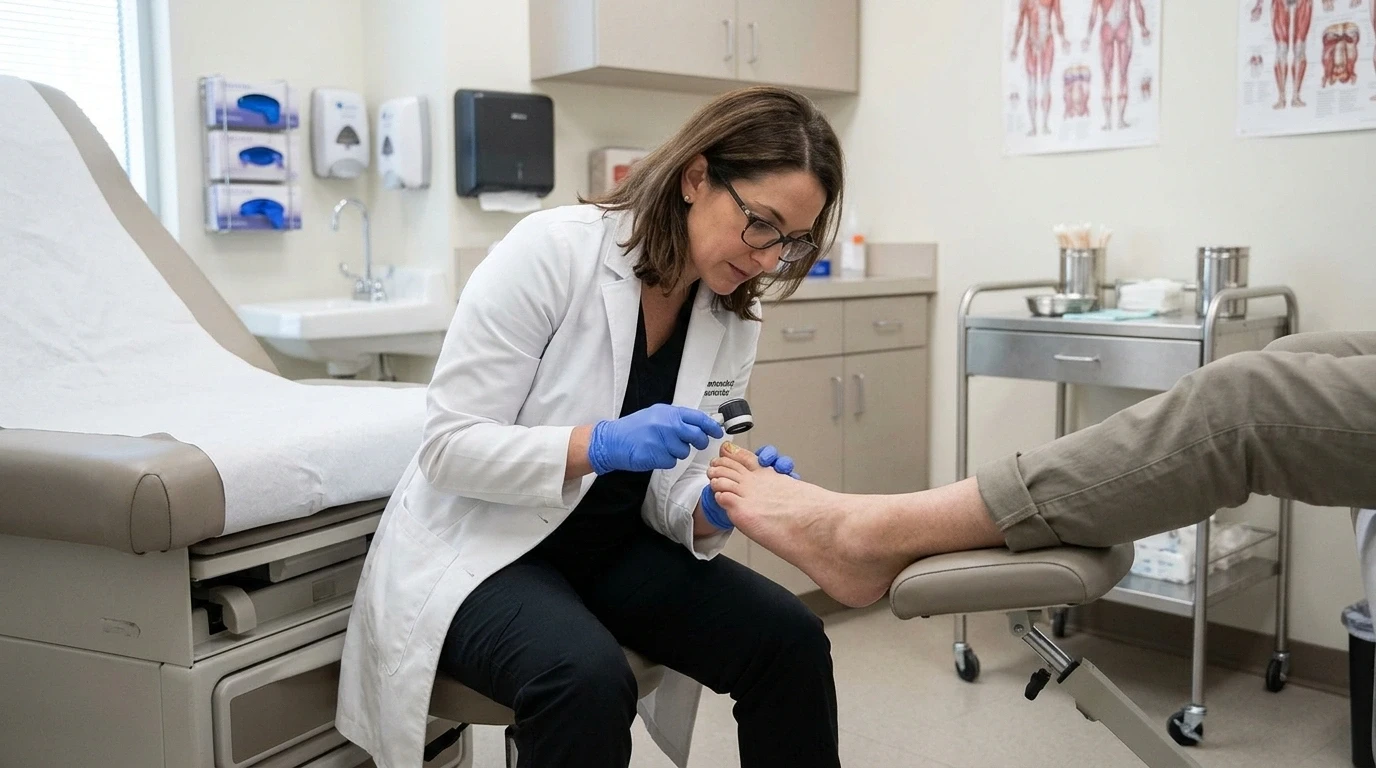
Diagnosis usually begins with a physical examination of the affected nails. The doctor may look at the color, thickness, texture, and condition of the nail and the surrounding skin, while also asking about the patient's medical history and possible exposure to fungal infections.
When necessary, a small nail clipping or sample of debris from underneath the nail may be collected and examined to help confirm whether fungus is present. This can also help distinguish fungal infection from other conditions that may produce similar nail changes.[2]
Accurate diagnosis helps the doctor choose an appropriate treatment plan and avoid treating the wrong condition. For anyone searching for a nail fungus doctor in Qatar, a professional assessment can provide a clearer understanding of whether the nail changes are actually caused by fungus and what type of care may be required.
Nail Fungus Treatment in Qatar: Topical vs. Oral Approaches
Nail fungus treatment in Qatar depends on the severity of the infection, the number of affected nails, the type of fungus involved, and the patient's overall health. There is no single treatment approach that is suitable for every patient. Some mild or limited infections may be treated with medication applied directly to the nail, while more extensive infections may require medication that works throughout the body. In selected cases, reducing the thickness of an affected nail or removing loose portions may also be part of the treatment plan.[2]
| Treatment Type | Primary Application | Clinical Considerations |
|---|---|---|
| Topical Treatment | Applied directly to the affected nail | Best for mild or superficial infections; minimal systemic interaction |
| Oral Medication | Systemic treatment working throughout the body | Indicated for moderate-to-severe or multiple-nail infections; requires monitoring |
| Mechanical Debridement | Thinning or trimming thick and loose nail portions | Adjunctive therapy to improve penetration of topical or oral agents |
| Preventive Care | Hygiene adjustments, footwear changes, and barrier care | Essential for preventing reinfection and recurrence |
At Gardenia Medical Centre, patients looking for nail fungus treatment Qatar can receive an assessment designed to identify the cause of the nail changes before a treatment plan is recommended. The focus is on understanding the condition, assessing its extent, and providing medical guidance based on the patient's individual needs rather than relying on self-treatment alone.
Does Nail Fungus Treatment Take a Long Time?
Nail fungus treatment can take time because nails grow slowly. Even when the infection has been controlled, the damaged part of the nail does not immediately disappear, and a healthy nail needs time to grow out. The time required for visible improvement varies from one person to another and depends on factors such as the affected nail, the extent of infection, and the treatment approach. Fingernails generally grow faster than toenails, so toenail changes can remain visible for a longer period.
Toenail vs. Fingernail Infections and When to See a Dermatologist
Toenail Fungus Treatment
Toenails are particularly susceptible to fungal infections because they are often enclosed in shoes and exposed to moisture and sweating. Athlete's foot can also spread to the toenails, making it important to consider both the nails and surrounding skin when assessing recurring infections. Toenail fungus treatment in Qatar depends on how many nails are affected and how deeply the infection has developed. If the infection keeps returning, the doctor may also consider factors that could be contributing to recurrence, such as persistent moisture, footwear, or an untreated fungal infection affecting the skin of the feet.
Fingernail Fungus Treatment
Although fungal infections are more common in toenails, fingernails can also become infected. Changes may include discoloration, thickening, brittleness, roughness, or separation from the nail bed. Because fingernail changes can have several causes, it is useful to establish the diagnosis before beginning a prolonged treatment plan. A medical assessment can help determine whether the changes are fungal or related to another nail condition.
When Should You See a Dermatologist?
You should consider seeing a dermatologist when a nail remains discolored, becomes increasingly thick or brittle, changes shape, separates from the nail bed, or develops discomfort. Medical assessment is also important when self-care does not improve the nail or when the infection appears to be spreading to additional nails. For patients looking for a nail fungus clinic in Doha, arranging an assessment can help identify the cause of persistent nail changes and determine whether treatment is actually needed.[3]
Can Nail Fungus Return and Tips for Prevention
Can Nail Fungus Return After Treatment?
Yes, nail fungus can return even after the infection has been successfully treated. Recurrence is relatively common, particularly when the factors that contributed to the original infection remain present. Keeping the feet dry, changing damp socks, choosing breathable footwear, avoiding shared personal nail tools, and treating fungal infections of the surrounding skin can help reduce the risk of another infection.
Tips for Preventing Nail Fungus
Good nail and foot care can help reduce exposure to fungi and lower some common risk factors. Useful habits include:[3]
- Keeping feet clean and dry.
- Changing socks regularly, particularly when they become damp.
- Choosing footwear that allows proper ventilation.
- Avoiding walking barefoot in shared wet areas (pools, locker rooms).
- Not sharing nail clippers or personal nail-care tools.
- Keeping nails trimmed straight across and clean.
- Avoiding damage to the nail and surrounding skin.
- Promptly treating athlete's foot when it is present.
Basic nail and foot hygiene can support overall care, but home treatment should not replace medical assessment when a fungal infection is suspected and the diagnosis is uncertain. Some nail conditions can look like fungus but require a different type of treatment. Using medication for a long period without confirming the cause may therefore delay appropriate care.
Nail Fungus Care at Gardenia Medical Centre
Gardenia Medical Centre provides medical care for patients who need assessment of persistent nail changes and suspected fungal infections. The focus is on understanding the underlying cause, evaluating the condition of the affected nails, and helping patients understand their treatment options.
Patients searching for a Medical Centre in Doha can arrange a consultation when nail discoloration, thickening, brittleness, or separation continues or becomes more noticeable. Early assessment can be particularly useful when the diagnosis is uncertain or when previous self-care has not improved the nail.
Gardenia Medical Centre provides comprehensive access to the Dermatology and Laser Department, where patients can seek professional dermatological assessment as part of their care for skin and nail concerns.
What Can You Expect After Starting Treatment?
Improvement is usually gradual because the infected portion of the nail needs to grow out. The nail may therefore continue to look abnormal for some time even when treatment is working. Following the treatment plan consistently is important, and the doctor may recommend follow-up appointments depending on the condition. Treatment can take several months before the full appearance of a healthy nail becomes visible.
Book Your Dermatology Consultation at Gardenia Medical Centre
If you are experiencing persistent nail discoloration, thickening, or brittleness, a professional dermatological assessment can clarify the diagnosis and guide you toward an effective treatment plan:
- Learn more about our Dermatology and Laser Department.
- Speak directly with Gardenia Medical Centre through the Contact Page.
- Book your appointment online through the Online Appointment Booking Page.
Frequently Asked Questions About Nail Fungus Treatment in Qatar
Is Nail Fungus Contagious?
Yes, fungal nail infections can spread between people, particularly through shared personal tools or contact with contaminated damp surfaces. Treating the infection and maintaining good foot and nail hygiene can help reduce the risk of spreading it.
How Is Nail Fungus Diagnosed in Qatar?
A doctor examines the affected nails and may take a small nail clipping or sample from underneath the nail when needed. Testing can help confirm the infection and distinguish it from other conditions that cause similar nail changes.
Can Toenail Fungus Be Treated?
Yes. Toenail fungus treatment in Qatar depends on the severity of the infection and how many nails are affected. A dermatologist can assess the condition and determine the appropriate treatment approach.
How Long Does Nail Fungus Treatment Take?
Treatment may take several months, and the nail can continue to look abnormal while healthy nail growth replaces the damaged portion. The exact duration depends on the infection and the treatment approach.
Can Nail Fungus Return After Treatment?
Yes, recurrence is possible even after successful treatment. Maintaining good nail and foot hygiene and addressing factors that contribute to fungal growth can help reduce the chance of another infection.