Hair Transplant in Qatar | Cost, Techniques, Results and What to Know
Hair loss can gradually change the appearance of the hairline, scalp density, and overall confidence, but deciding whether transplantation is the right solution should begin with understanding why the hair is thinning in the first place. Hair Transplant in Qatar may be considered for people with certain patterns of permanent hair loss when there is enough healthy donor hair and the scalp can support new growth. A proper assessment helps determine whether transplantation is appropriate, what may be causing the loss, and which approach may fit the individual case.
At Gardenia Medical Centre, dermatology care begins with assessing the scalp and hair before discussing options. A consultation through Dermatology and Laser can help patients understand their condition and whether a hair restoration procedure should be considered as part of their treatment plan.
When Is a Hair Transplant Appropriate?
A Hair Transplant is generally considered when hair loss has created areas of reduced density or permanent thinning, and there is sufficient healthy donor hair available for transplantation. The decision depends on factors such as the pattern and extent of hair loss, donor-area density, scalp condition, age, and the expected progression of hair loss.
Does Every Type of Hair Loss Require a Transplant?
No. Hair loss can have many causes, including hereditary factors, hormonal changes, medical conditions, nutritional issues, and temporary shedding. Some conditions may respond to non-surgical hair loss treatment, while others may require further investigation before transplantation is considered.
For this reason, identifying the cause of hair loss is an important first step before choosing a procedure.
How Is Hair Assessed Before a Hair Transplant?
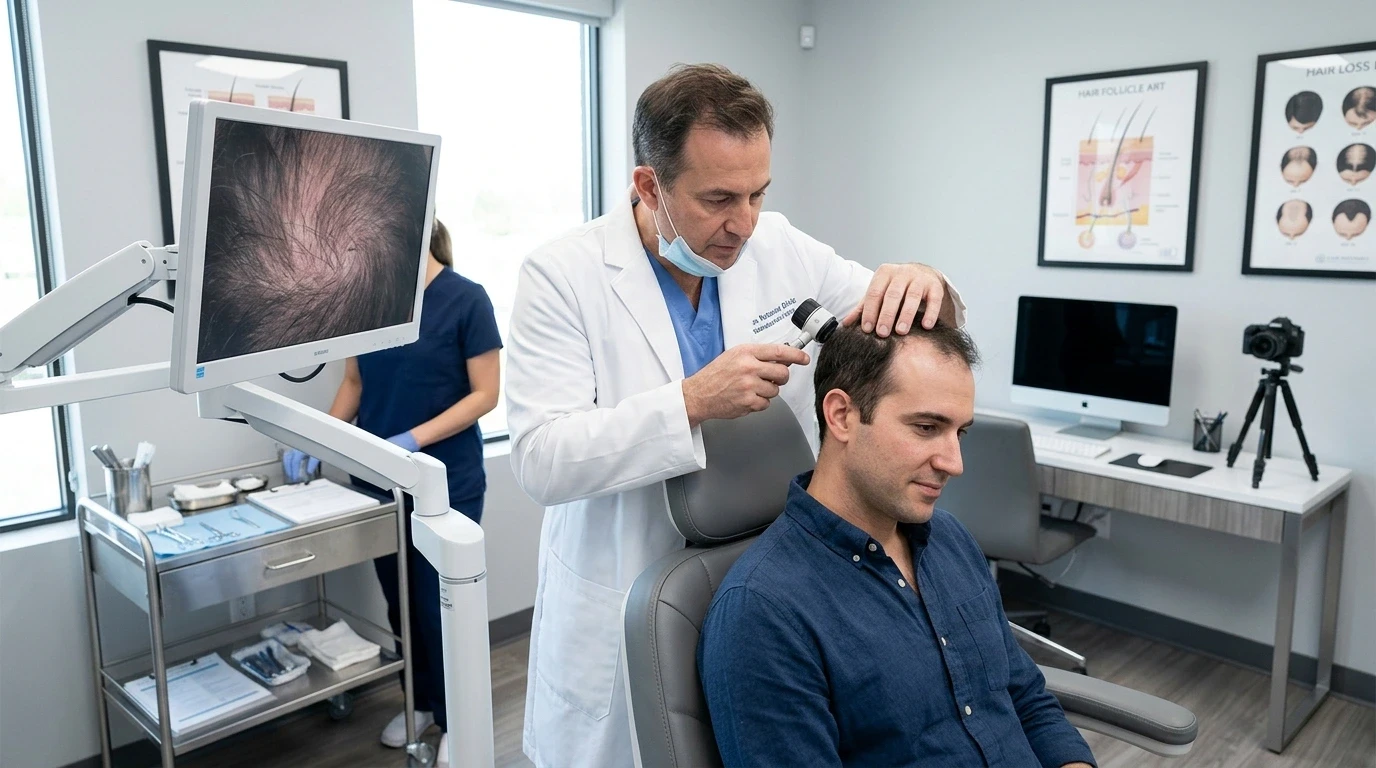
A medical assessment usually includes a discussion of when the hair loss started, how quickly it has progressed, family history, and any changes affecting the scalp or general health. The scalp and donor area are then examined to understand hair density and the overall pattern of thinning.
A General Dermatology Consultation can be useful when the cause of hair loss is unclear, the loss is sudden or patchy, or there are signs of a scalp condition that should be addressed first.
Why Is Diagnosis More Important Than Choosing a Technique?
The technique is only one part of the decision. A suitable treatment plan should take into account the reason for hair loss, the amount of donor hair available, the area requiring coverage, and whether the existing hair is likely to continue thinning.
At Gardenia Medical Centre, the initial assessment focuses on understanding the individual hair and scalp condition before discussing available treatment options, helping patients make decisions based on their medical needs rather than selecting a technique at random.
What Are the Main Hair Transplant Techniques?
Two commonly discussed approaches are follicular unit extraction and strip harvesting. The choice between them depends on the patient's condition, donor area, hair characteristics, and the clinical plan.
FUE Hair Transplant
A FUE hair transplant involves removing individual follicular units from the donor area and placing them into areas affected by thinning or hair loss. Because follicles are extracted individually, the technique does not involve removing a strip of scalp.
FUT Hair Transplant
A FUT hair transplant involves removing a strip of skin containing hair follicles from the donor area, after which the follicles are prepared for transplantation. The donor area is closed with sutures, leaving a linear scar.
Is One Technique Better for Everyone?
There is no single technique that is appropriate for every patient. The decision should be based on the individual's donor hair, degree of hair loss, scalp characteristics, desired coverage, and the clinical assessment.
FUE vs FUT: What is the Difference?
Neither approach should be selected solely because it is promoted as more advanced or more suitable for everyone. The patient's hair characteristics and treatment goals remain important when determining the appropriate approach.
| Feature | FUE | FUT |
|---|---|---|
| Follicle removal | Individual follicular units | Strip of scalp |
| Donor-area scar | Multiple tiny circular micro-scars | Fine linear scar |
| Hair extraction | Individual follicles directly extracted | Follicles prepared from removed strip |
| Suitability | Depends on donor hair, scalp density, and case | Depends on donor hair elasticity and case |
| Choice | Based on clinical assessment | Based on clinical assessment |
Results, Timeline, and Hair Transplant Cost in Qatar
What Factors Affect Hair Transplant Results?
The final appearance depends on several factors rather than the procedure alone. These include the quality and density of donor hair, the extent of existing hair loss, the condition of the scalp, the design and placement of transplanted follicles, and the natural progression of non-transplanted hair. Realistic expectations are also important because transplanted hair does not immediately produce its final appearance. Growth develops gradually, and the timeline varies between individuals.
How Long Does the Hair Transplant Journey Take?
The Hair Transplant journey includes assessment, treatment planning, the procedure itself, and a period of gradual hair growth afterwards. The procedure may take several hours depending on the number of grafts and the treatment plan.
After transplantation, the newly placed hair may initially shed before new growth develops. Visible improvement generally takes months rather than days, and the final outcome may continue developing for a longer period.
At Gardenia Medical Centre, patients can discuss the expected stages of their treatment during the consultation, including the factors that may affect the timeline and the realistic expectations for their individual condition.
How Much Does a Hair Transplant Cost in Qatar?
The hair transplant cost in Qatar is not necessarily the same for every patient. Pricing can depend on the extent of hair loss, number of grafts required, technique used, treatment complexity, and the individual treatment plan.
Patients searching for a hair transplant price in Qatar should therefore avoid relying on a single advertised figure without understanding what is included in the proposed treatment.
What Should You Know About the Cost Before Booking?
Cost is one factor to consider, but it should be viewed alongside medical assessment, treatment planning, the condition of the donor area, and the experience relevant to the procedure. An appropriate consultation can clarify whether transplantation is suitable in the first place and what type of treatment may be required.
Gender Considerations, Hair Progression, and Potential Risks
Is Hair Transplantation Suitable for Men and Women?
Hair transplantation can be considered for both men and women when the pattern and cause of hair loss make transplantation appropriate. However, the distribution of thinning and the underlying cause can differ considerably.
Women with diffuse thinning, for example, may require a careful assessment before transplantation because there may not be a clearly defined donor area suitable for the procedure. Identifying the cause of thinning is therefore particularly important.
Can Hair Loss Continue After a Hair Transplant?
Yes. Transplanted follicles may continue growing, but the natural hair surrounding them can still become thinner if the underlying hair-loss process continues. This is why a medical assessment should consider both the areas already affected by hair loss and the condition of the remaining hair. Long-term planning can be important for maintaining a balanced appearance as the hair changes over time.
What Are the Possible Risks After a Hair Transplant?
As with other surgical procedures, transplantation can be associated with temporary effects such as swelling, bruising, discomfort, bleeding, infection, or changes in sensation. Scarring can also occur, with its appearance depending partly on the technique used. The expected recovery and potential risks should be discussed during the medical consultation so that patients understand the procedure before making a decision.
How to Choose the Right Clinic and When to Have a Consultation
How Do You Choose the Right Doctor and Centre for a Hair Transplant?
When looking for the best hair transplant doctor, patients should look beyond promotional claims and consider factors such as relevant medical qualifications, experience with hair-loss assessment, understanding of donor-area limitations, treatment planning, and the ability to explain realistic expectations.
The centre should also provide an appropriate medical assessment rather than treating transplantation as a purely cosmetic decision. Understanding why the hair is falling out and whether the condition is stable can be just as important as the technique selected.
When Should You Have a Dermatology Consultation Before a Hair Transplant?
A dermatology consultation can be especially useful when hair loss is sudden, patchy, rapidly progressing, associated with scalp symptoms, or difficult to explain. It can also help distinguish between conditions that may benefit from medical treatment and those where transplantation may be considered.
Hair Transplant Services at Gardenia Medical Centre
Gardenia Medical Centre approaches hair-loss care through medical assessment and individualized planning. Before discussing transplantation, the patient's scalp condition, pattern of hair loss, and available donor hair can be considered to determine whether the procedure is appropriate.
The Dermatology and Laser Department provides care for a range of skin and hair concerns, allowing patients to discuss hair loss within a broader medical assessment when needed. This approach can be particularly useful when the cause of thinning has not yet been established.
Questions to Ask Before Booking a Hair Transplant
Before booking, it is useful to ask:
- What is causing my hair loss?
- Am I a suitable candidate for transplantation?
- How much donor hair do I have?
- Which technique may suit my condition?
- How many grafts may be required?
- What timeline should I expect for visible growth?
- Could my existing hair continue to thin?
- What is included in the proposed treatment cost?
These questions can help patients understand the treatment plan and establish realistic expectations before proceeding.
Contact Gardenia Medical Centre
Ongoing hair loss, a receding hairline, or increasing areas of thinning can benefit from medical assessment, particularly when the cause is unclear or the pattern is changing. Understanding the condition before choosing treatment can help determine whether transplantation is appropriate.
At Gardenia Medical Centre, patients can discuss hair and scalp concerns through dermatology services, receive an assessment of their condition, and understand the available care options according to the diagnosis and severity of hair loss:
- Explore our Dermatology and Laser services.
- Contact Gardenia Medical Centre directly through the Contact Page.
- Book your appointment online through the Online Appointment Booking Page.
Frequently Asked Questions About Hair Transplant in Qatar
How much does a Hair Transplant in Qatar cost?
The cost varies according to the extent of hair loss, number of grafts, technique, and treatment plan, so a consultation is needed to determine the expected cost in Qatar.
Is a hair transplant suitable for every type of hair loss?
No. Some causes of hair loss may require medical treatment or further investigation before transplantation is considered in Qatar.
What is the difference between FUE and FUT?
FUE removes individual follicular units, while FUT removes a strip of scalp containing follicles. The appropriate approach depends on the patient's condition and donor area.
When will I see the results of a hair transplant?
Hair growth develops gradually, and noticeable improvement usually takes several months. The timeline can vary depending on the individual and the treatment plan.
Can hair loss continue after a hair transplant?
Yes. Transplanted follicles can continue growing while non-transplanted hair may continue to thin, depending on the underlying hair-loss pattern.
Is a hair transplant suitable for women?
It can be suitable for some women, but the cause and pattern of hair loss should be assessed carefully before transplantation is considered.